
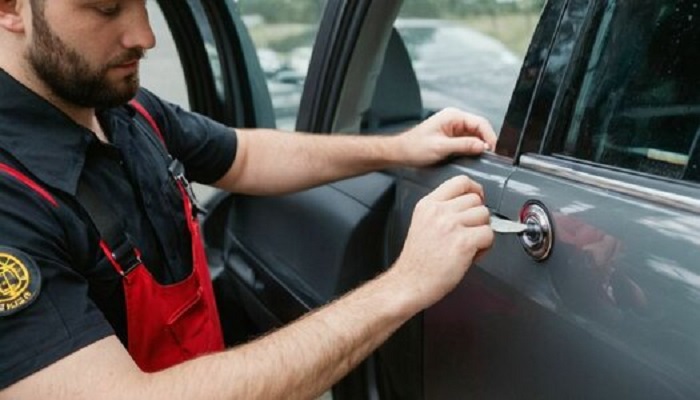
Car break-in involves tampering with the locks and access elements, which is permitted only with legal grounds and proof of ownership of the vehicle. This article will discuss when break-in is considered legal, what documents may be required, what restrictions apply when working with modern security systems, and how to avoid damage and disputes.
Compliance with the rules is important for both the owner and the contractor: correct identification of the owner, documentation of the circumstances, and the selection of safe methods help reduce risks and ensure the safety of property. If you require specialist assistance, you can order a car break-in on https://carlocksmithguelph.ca/, after first clarifying the list of required documents and the work procedure.
Regulatory Framework and Requirements for Emergency Access to a Car
Emergency car break-in is considered a high-risk legal activity, as it affects legally protected property rights and property integrity issues. The technician is obligated to act only with a legal basis and in compliance with requirements for confirming the applicant’s rights to the vehicle or their legal authority to act on behalf of the owner.
Civil and criminal laws governing property protection, liability for damage to property, and unauthorized access are of key importance. In practical terms, this means mandatory recording of the request, document verification, and adherence to the principle of minimal intervention: opening is performed in a manner that eliminates or minimizes the risk of damage and does not create conditions for further unauthorized use of the vehicle.
Verification of the basis for access and documentation
Before commencing work, the technician must ensure that the request comes from the owner or an authorized person, and that the circumstances truly require emergency access (loss of keys, blocked locks, documents/child/pet left inside, activation of the anti-theft system, etc.). If in doubt, the priority is to refuse the work and suggest contacting the police, dealer, or authorized roadside assistance service.
- Customer identification: identity verification and matching of data with vehicle documents.
- Proof of ownership: registration certificate/ownership documents or power of attorney; If unavailable, alternative confirmation and mandatory documentation of the reasons are provided.
- Inspection and recording of the condition: before and after photos/videos, indication of any damage, and a note of the selected opening method.
- Consent and scope of work: written agreement that the technician will perform access only, without any other actions (e.g., without starting the engine), unless otherwise agreed upon.
Licensing, Contractual Terms, and Technician’s Liability
A separate license specifically for “emergency car opening” may not be required, but the technician is obligated to comply with business registration requirements, applicable permits, and the rules for providing services to the consumer. Legal security is usually ensured by properly formalized relationships with the customer: a work order, contract/receipt, consent to data processing, payment terms, and claims procedures.
The technician’s liability arises in the event of a violation of the legal access procedure, exceeding the agreed-upon scope of work, or causing damage. Civil liability is related to compensation for damage (damage to locks, glass, seals, wiring, interior components), as well as the quality of the service provided. Administrative risks arise from violations of business regulations and document flow requirements. Criminal risks arise from complicity in the unauthorized seizure of a vehicle, forgery/use of false documents, or deliberately ignoring obvious signs of unlawful use.
- Act only with verified authority and record the grounds for accepting an order.
- Adhere to the principle of minimal harm: choose a method of opening that reduces the likelihood of damage and cease work when the risk increases.
- Restrict access: do not share tools/information with third parties, do not disclose vulnerabilities of specific models, do not leave the vehicle in a condition that facilitates subsequent hacking.
- Standardize documents: inspection checklist, photographic documentation, signatures of the parties, a list of completed actions, and warnings about possible consequences.