
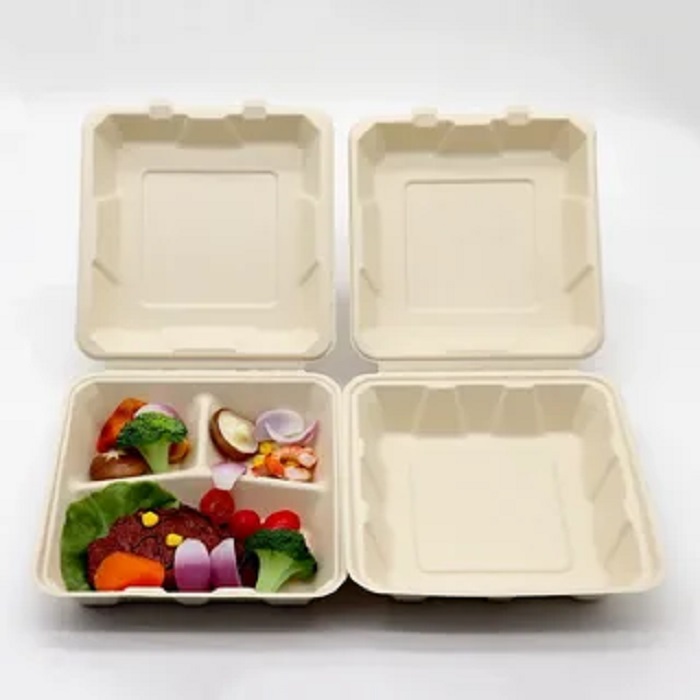
Food packaging buyers often begin with a simple request: a lunch box that uses less conventional plastic. The real sourcing decision is more detailed. Heat resistance, grease control, lid fit, transport strength and local waste systems all affect whether a package works in practice. Buyers considering products from Regreen Global or another compostable packaging supplier should define the service conditions before comparing material labels.
Start with the food and service model
A container for a cold salad faces different demands from one holding curry, noodles or fried food. Record the expected filling temperature, holding time, oil content, moisture level and whether the package will be reheated. Delivery distance also matters because vibration and stacking expose weak rims and closures.
The package should be tested as a complete system. A strong base with a poorly fitting lid still creates leaks, while a heat-resistant tray may deform if stacked before the food cools.
Understand what the material claim covers
Terms such as plant-based, biodegradable and compostable are not interchangeable. A material may contain renewable feedstock yet still require a specific industrial process at end of life. Buyers should ask which standard supports the claim, which component was tested and under what conditions. The lid, coating, label and adhesive should be reviewed separately instead of assuming the entire package behaves like the main tray.
Check food-contact and migration requirements
Compostability does not replace food-contact compliance. Suppliers should provide documentation appropriate to the destination market and the intended food type. Fatty, acidic and hot foods can create different migration conditions. Product testing should therefore reflect actual use rather than only room-temperature storage.
Evaluate heat, moisture and grease resistance
Natural-fiber packaging can soften when exposed to steam or sauces for extended periods. The buyer should specify how long the container must remain functional and whether it needs freezer, microwave or oven compatibility. Grease resistance should be tested at folds, corners and lid interfaces, where leakage often begins.
Visual appearance after use is also important. A package may remain structurally safe but show dark oil marks that customers interpret as failure. Samples filled with the real menu provide the clearest evidence.
Review dimensions and line compatibility
Nominal volume alone does not determine fit. Measure top dimensions, base footprint, internal depth, rim geometry and stacking height. Restaurants using sealing equipment or automated denesting should test the package on their own line. Small dimensional changes can affect film sealing, dispenser performance and case packing.
Build quality control around critical features
Incoming inspection can focus on weight, dimensions, lid retention, leakage and compression strength. These checks are more useful when tolerances are agreed before production. Buyers should also confirm how the supplier controls moisture in molded-fiber products, because excessive variation can change stiffness and stacking behavior.
Plan the end-of-life message carefully
Environmental claims should match the disposal routes available to customers. Clear instructions reduce confusion and avoid overstating the benefit. If local compost collection is limited, the brand should explain the applicable conditions rather than promise that every package will disappear in any environment.
A well-sourced compostable lunch box is not selected by one logo. It is the result of matching material performance, compliance evidence, production consistency and realistic disposal information to the way the package will actually be used.