
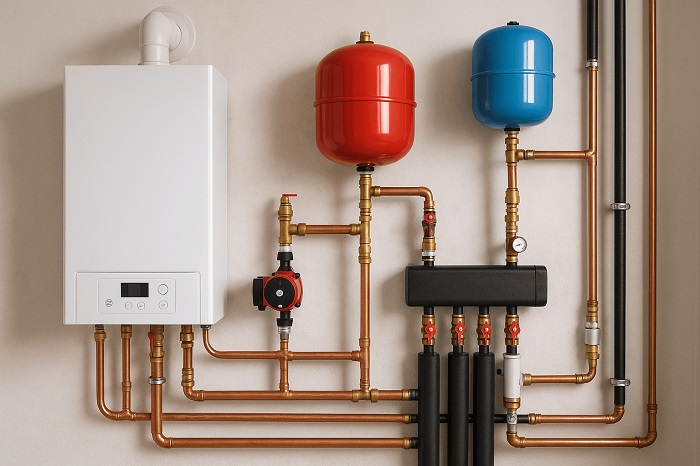
Central heating is one of the most common and effective ways to maintain a comfortable temperature in residential spaces. It involves the use of a single system that distributes heat throughout the home through a network of radiators or underfloor heating connected to a common heat source, typically a boiler or heating plant. This approach ensures uniform heating and ease of operation, eliminating the need for the owner to individually control each heating appliance.
The system operates by circulating hot water or air through pipes, heating the room. In the event of malfunctions or the need for maintenance, central heating repair is especially important, allowing for quick and effective resolution of any system-related issues. Reliable central heating repair ensures stable heating conditions and comfort in the home during the cold season.
Definition of a central heating system and its advantages for private homes
A central heating system is a complex of engineering solutions that deliver coolant to a living space to maintain a comfortable temperature. It typically includes a central heat source, such as a boiler room or heating plant, and an extensive network of pipes circulating hot water or air. This system is designed to serve one or more buildings, making it particularly suitable for private homes, especially large ones.
The advantages of a central heating system for private homes include high efficiency, ease of operation, and consistent indoor temperature. Thanks to the centralized heat supply, owners eliminate the need to manually control heating devices in each room. Furthermore, this system allows for even heat distribution, creating comfortable conditions regardless of the outside weather. The use of centralized systems also contributes to more efficient energy use and lower heating costs.
Advantages of a central heating system:
- Unified temperature control and monitoring system;
- High reliability and safety;
- Lower maintenance costs compared to individual heat sources;
- Possibility of using alternative energy sources;
- Stable and uniform heating throughout the entire living space.
Heat Distribution and Control in the System
Hydraulic and automated control systems are used to ensure uniform heat distribution. Automatic thermostats and control valves allow individual temperature control in each room. This improves energy efficiency and ensures comfort for residents, while also preventing excessive fuel or electricity consumption.
Types of Heat Transfer Fluids: Choosing the Optimal Option for Specific Conditions
Choosing the right heat transfer fluid promotes system longevity, reduces costs, and improves comfort in the living space. The main types of heat transfer fluids and recommendations for their use are discussed below.
Main Types of Heat Transfer Fluids and Their Features
- Water
The most common and readily available heat transfer fluid. It has high thermal conductivity and good heat transfer properties. It requires protection from freezing and corrosion, which is achieved by using special additives or corrosion inhibitors. Suitable for open or closed-loop systems.
- Glycol Solutions
Used in cold climates to prevent freezing. It can be ethylene glycol or propylene glycol. In the former case, toxicity and the need for special precautions must be taken into account, while in the latter case, environmental friendliness and human safety must be taken into account.
- Composite and Specialized Fluids
These include oils, synthetic fluids, and special hydraulic oils used in some industrial systems. They provide stable operation at high temperatures, but require special operating and maintenance conditions.
The choice of the optimal coolant depends on climatic conditions, system type, safety requirements, and budget. In most cases, for domestic systems, it is recommended to use water with additives that provide protection against corrosion and freezing. In regions with harsh climates, glycol solutions are preferable, and in industrial or specialized systems, other more suitable fluids are recommended.
Proper material selection, timely maintenance, and adherence to coolant operating recommendations ensure the efficient and reliable operation of a central heating system, creating a comfortable atmosphere in the house for many years.