
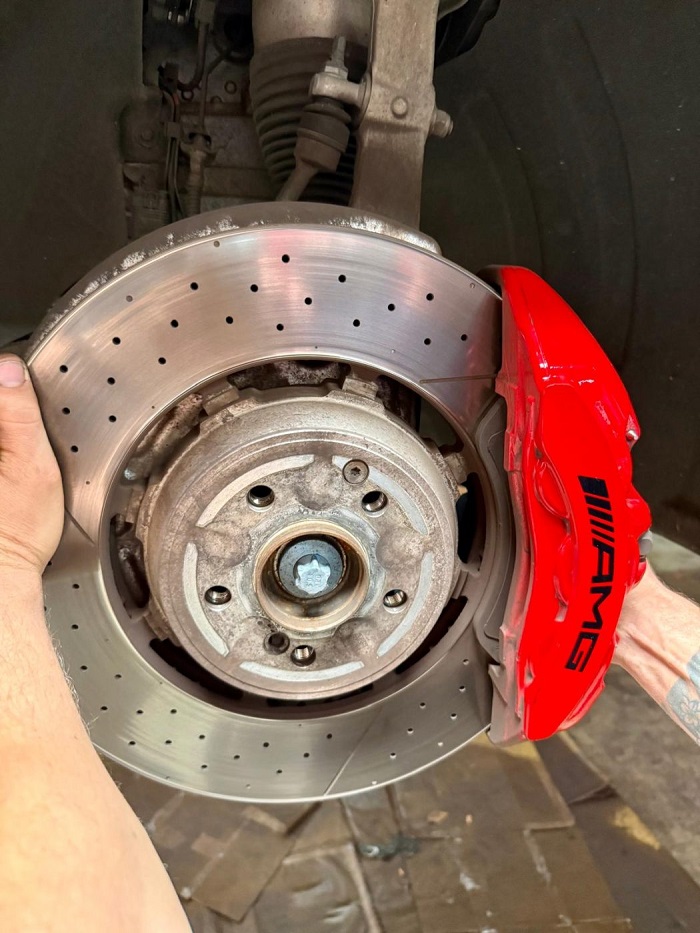
If your vehicle suddenly requires more distance to come to a complete stop, it should never be ignored. Longer stopping distances are often one of the earliest warning signs that something is wrong with the braking system. While some changes happen gradually, even a small reduction in braking performance can significantly increase the risk of an accident during emergency situations.
A professional inspection of your Brake Disc in Santa Clara and the entire braking system can identify the cause early, helping restore safe stopping power and prevent more expensive repairs in the future.
How Your Braking System Stops the Vehicle
Your vehicle relies on several components working together every time you press the brake pedal.
The braking system includes:
- Brake discs (rotors)
- Brake pads
- Brake calipers
- Brake fluid
- Master cylinder
- Brake lines
- ABS system
If one component begins to wear or malfunction, the entire system becomes less effective, increasing stopping distance.
1. Worn Brake Pads
Brake pads gradually become thinner with normal use.
As they wear down, they provide less friction against the brake discs, resulting in:
- Reduced stopping power
- Longer braking distances
- Increased brake noise
- Greater rotor wear
Replacing brake pads before they become excessively worn helps maintain optimal braking performance.
2. Damaged Brake Discs
Brake discs are exposed to constant heat and pressure. Over time they may develop:
- Deep grooves
- Warping
- Heat spots
- Uneven wear
- Cracks
A worn Brake Disc in Santa Clara may reduce the amount of contact between the pads and rotor, making braking less efficient.
3. Old or Contaminated Brake Fluid
Brake fluid transfers hydraulic pressure from the brake pedal to the brakes.
As it absorbs moisture over time, it can:
- Reduce hydraulic pressure
- Cause a soft brake pedal
- Lower the boiling point
- Decrease braking efficiency
Routine brake fluid testing helps prevent these issues.
4. Brake Caliper Problems
Brake calipers apply pressure to the brake pads during braking.
If a caliper sticks or fails to operate correctly, it may cause:
- Uneven braking
- Vehicle pulling to one side
- Reduced stopping performance
- Premature brake wear
Caliper problems should be repaired promptly to avoid further damage.
5. Worn Tires
Even a perfectly functioning braking system depends on tire traction.
Worn or improperly inflated tires can:
- Increase stopping distance
- Reduce road grip
- Make emergency braking less effective
- Increase the risk of skidding
Brake inspections should always include a basic tire condition check.
6. ABS System Issues
The Anti-lock Braking System helps maintain steering control during hard braking.
If ABS components malfunction, drivers may notice:
- Warning lights
- Reduced braking stability
- Less effective emergency stops
- Inconsistent brake response
Professional diagnostics can identify ABS-related faults.
7. Excess Vehicle Weight
Carrying excessive cargo or towing heavy loads requires more braking force.
Additional weight:
- Increases stopping distance
- Creates more brake heat
- Accelerates brake wear
- Places greater stress on brake discs and pads
Drivers who frequently haul heavy loads should schedule brake inspections more often.
8. Aggressive Driving Habits
Frequent hard braking causes excessive heat and faster component wear.
Aggressive driving may lead to:
- Brake fade
- Rotor overheating
- Premature pad wear
- Reduced braking efficiency
Smooth driving habits help extend the life of your braking system.
Warning Signs You Shouldn’t Ignore
Schedule a brake inspection immediately if you notice:
- Longer stopping distances
- Brake pedal vibration
- Grinding or squealing noises
- Soft brake pedal
- Vehicle pulling while braking
- Burning smell after braking
- Brake warning lights
Early diagnosis can prevent more extensive repairs.
How to Improve Braking Performance
You can help maintain strong braking performance by:
- Replacing worn brake pads on time
- Inspecting brake discs regularly
- Changing brake fluid as recommended
- Keeping tires properly inflated
- Avoiding aggressive braking
- Scheduling routine brake inspections
Preventive maintenance keeps every brake component working together efficiently.
Professional Brake Inspection at One Nation Auto
When a vehicle begins taking longer to stop, a complete brake inspection is the safest solution.
At One Nation Auto, experienced technicians inspect every Brake Disc in Santa Clara, along with brake pads, calipers, brake fluid, brake lines, ABS components, and the entire braking system. Using advanced diagnostic equipment, they accurately identify the cause of reduced braking performance and recommend the most effective repair.
Whether your vehicle needs new brake pads, brake disc replacement, brake fluid service, or a complete brake system inspection, One Nation Auto provides reliable service that helps keep you safe on the road.
Benefits of Regular Brake Maintenance
Routine brake service helps:
- Reduce stopping distances
- Improve braking response
- Extend brake component life
- Prevent unexpected failures
- Lower long-term repair costs
- Improve vehicle safety
- Increase driver confidence
Consistent maintenance is one of the best ways to protect both your vehicle and your passengers.
Longer stopping distances are often the first sign that your braking system needs attention. Worn brake pads, damaged rotors, contaminated brake fluid, sticking calipers, and other issues can all reduce your vehicle’s ability to stop safely.
Regular inspection of your Brake Disc in Santa Clara and the complete braking system helps identify problems before they become serious. With professional brake service from One Nation Auto, you can maintain reliable stopping performance, improve safety, and enjoy greater confidence every time you drive.